Camino in Summer: Should You Avoid June, July, and August?
Every year, more pilgrims walk in June, July, or August, mostly because it is the only time off work or school allows. But the numbers from the Pilgrim's Reception Office, combined with a closer look at the season itself, tell a clear story. Summer is the hardest time to walk the Camino, not the best.
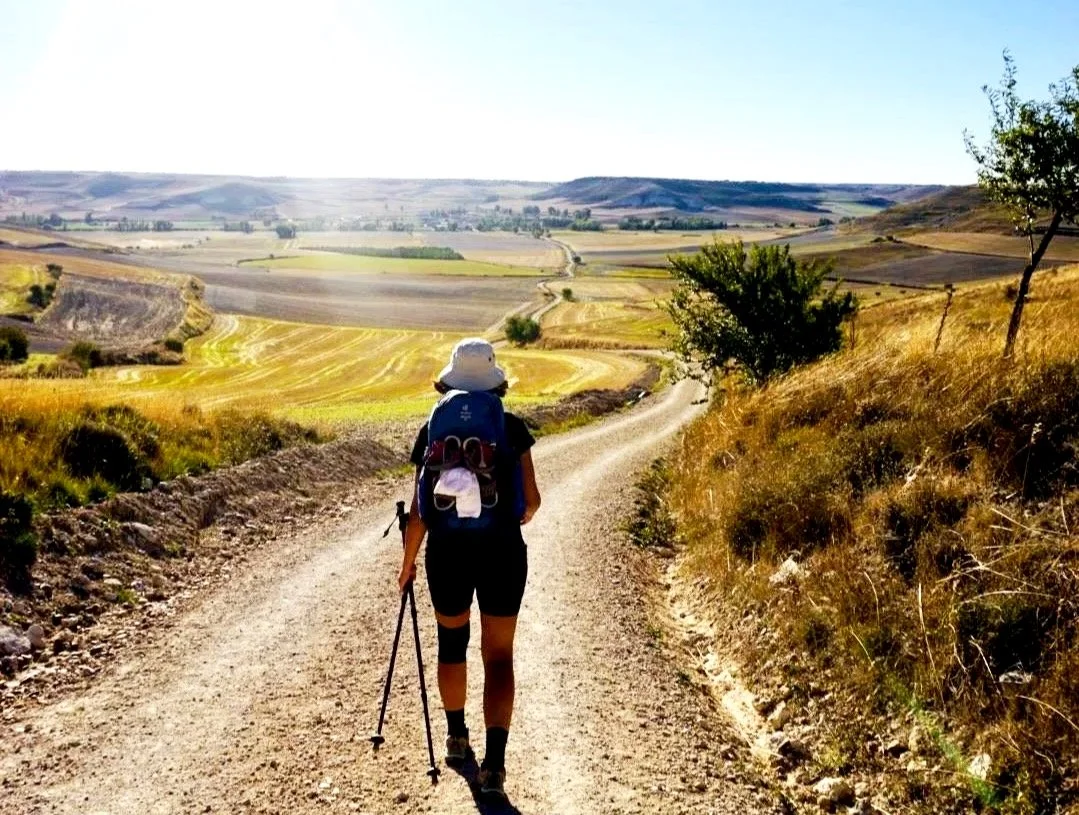
Open road, no shade. Exactly the kind of stretch that makes summer walking harder than people expect.
The Camino Keeps Growing, Every Year
In 2025, the Pilgrim's Reception Office in Santiago recorded 530,919 pilgrims who received the Compostela. That is a new record, the third record year in a row, and about 6% more than 2024. Ten years ago, the total was roughly half that number. 2025 is the first year the total actually passed the half million mark. Any advice or blog based on older numbers is already outdated.
Francés, Portugués, and Norte Are Not Growing the Same Way
Camino Francés. Still the most walked route by far, with about 242,000 pilgrims in 2025, or 46% of the total. It is now the slowest-growing of the three major routes, up only 2% from 2024.
Camino Portugués. This route is where the growth is concentrated. The Coastal variant grew nearly 20% in a single year, the fastest growth of any major route on the Camino. A Portugués that felt quiet five years ago is very likely not quiet anymore, especially on the coast in summer, where beach tourism adds to pilgrim traffic.
Camino del Norte. Still the quietest of the three, growing less than 1% a year. It remains the best option for more solitude among these three routes. But quieter than the other two does not mean empty, especially in July and August.
Which Months Are Actually the Busiest
The answer is more complicated than summer bad, fall good.
In 2025, September was the busiest month of the year, with almost 77,000 pilgrims, over 15% of the year's total. In 2024, the busiest month was actually May, at about 69,500 pilgrims. August came in second that year, close behind at 68,600. September was third, and June fourth.
This means there is no single quiet season and one crowded season. From April through October, the Camino stays busy. Together, these seven months make up around 93% of the year's total pilgrims. November through March combined make up only about 7%. That stretch is the only one that offers real solitude, along with cold weather, short days, and closed albergues in smaller towns.
September is not a hidden quiet month. In 2025, it was the busiest month of the year. What summer adds on top of the crowd is heat.
Why Summer Hits Harder Than the Numbers Alone Show
Crowd size is only half the problem. Heat is the other half.
Walking 20 to 25 km a day, sometimes 30 on a more ambitious plan, is already demanding for anyone not used to it. Add direct sun with no shade for long stretches, common on parts of all three routes, and the walk becomes considerably harder. This is often the point where a meaningful walk turns into something pilgrims are simply trying to survive.
August adds one more factor. It is the main vacation month across Spain and much of Europe, which brings more domestic day-trippers and short-term walkers onto the trail, along with higher demand for accommodation from regular tourists, not only pilgrims.
If Summer Is the Only Option
For many pilgrims, summer is the only realistic time to walk. A few adjustments make a real difference.
Start early. In July, the sun is already up by around 7 AM in Galicia.
Consider a 5 AM wake-up, especially on stages with long stretches of open, shadeless road.
Drink more than feels necessary. Closer to 3 liters a day, sometimes more, depending on heat and sweat.
Book a bed a day ahead wherever possible, especially on the Francés and the Portugués Coastal, the two busiest of these three routes in summer.
Arrive early, not just to beat the heat, but to beat the crowd to the albergue.
Consider a coastal route instead. The Camino del Norte and the Portugués Costa run along the ocean for much of the way. Sea breeze does not erase summer heat, but it takes a real edge off it, compared to shadeless inland stretches like the Meseta on the Francés. The trade-off is more elevation change on the Norte, or busier beach towns on the Portugués Costa in July and August.
These recommendations are general, for Spain and Portugal on these specific routes. Conditions shift year to year, so check current advice closer to the actual travel dates.
What Works Better
For pilgrims with any flexibility, late September through October tends to offer the balance most people are looking for. Not empty, but not overwhelming either. Enough pilgrims to build real connections, without a constant crowd.
The Camino changes every year, and what was true 2 years ago is no longer true today.
Buen Camino.