Sarria to Santiago: Is the Last 100 km Worth It?
A reader asked a very good question. They want to know what to expect walking from Sarria to Santiago, the last 100 km of the Camino Francés. It's a great question and it deserves a good answer. So let's actually break it down.
What the Last 100 km Actually Is
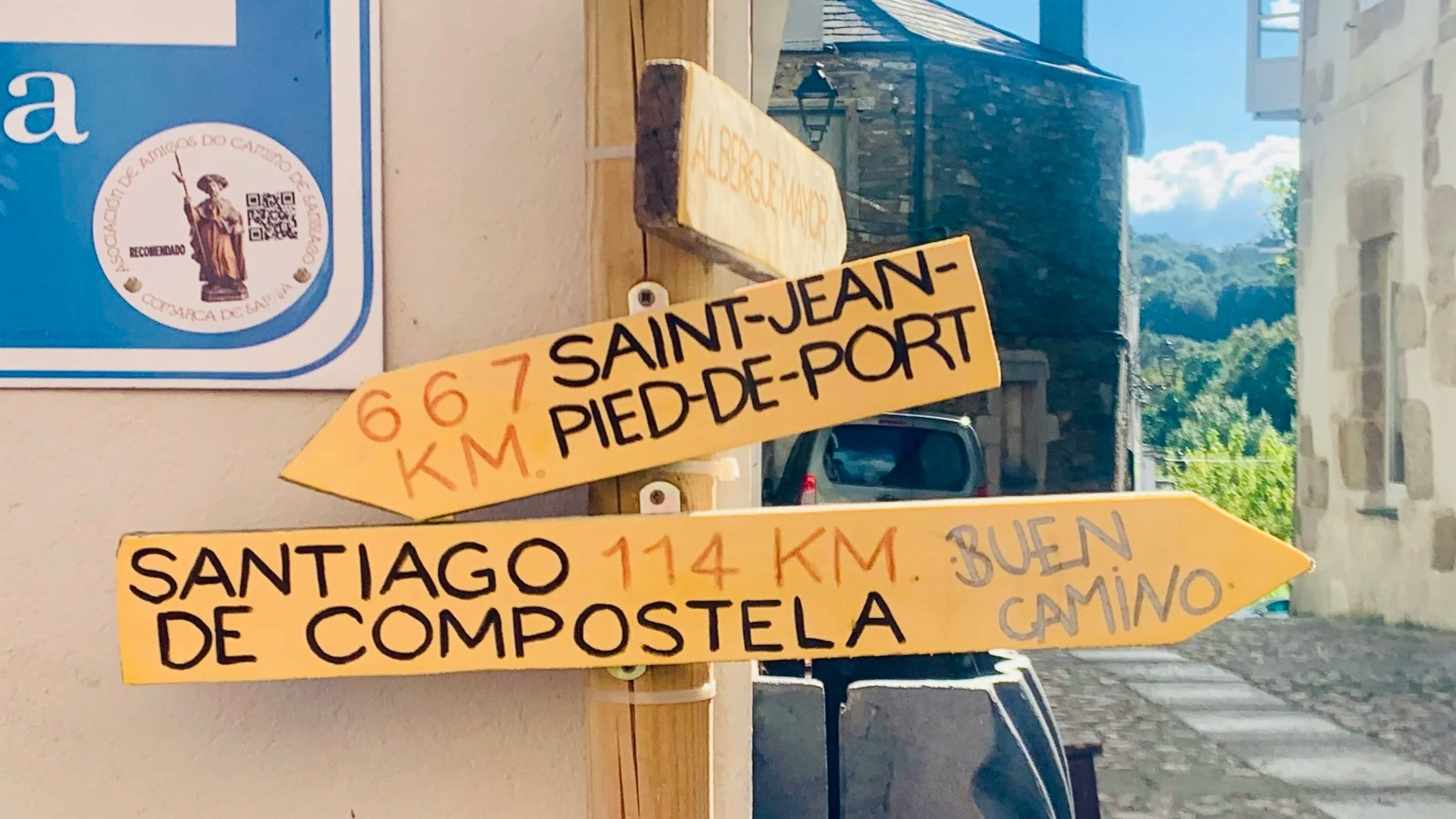
Sarria to Santiago: the last 100 km of the French Way.
Sarria sits almost 100 km from Santiago de Compostela. That number is not a coincidence. To receive the Compostela, the official certificate of your pilgrimage, you need to walk at least 100 km, or cycle at least 200 km. Sarria is the closest town to Santiago that clears that distance with some room to spare, which is exactly why it became the starting point for so many pilgrims.
In practice, most people walk closer to 110 or 115 km from Sarria. The stages don't split perfectly at the 100 km mark, so you end up adding a few extra kilometers to reach a town with an albergue for the night. There's also a detail many first-timers don't know about. For this last stretch, the pilgrim office asks for two stamps per day in your credencial, one in the morning and one in the evening, instead of the usual one. It's their way of confirming you actually walked the distance, since this is the most common stretch for people to try to skip parts of it.
The path itself runs through rural Galicia. Expect rolling green hills, eucalyptus and oak forests, small dairy farms, and a lot of rain, especially in autumn and spring. You'll pass through Portomarín, Palas de Rei, Melide, which is famous across Spain for its octopus, Arzúa, known for its cheese, and O Pedrouzo, before the final push into Santiago. This route has carried pilgrim traffic for centuries. What's different today is simply the number of people walking it at once.
What You'll Actually Experience
Here's the real picture, not the postcard version. Mornings start early and loud. Headlamps switch on before sunrise, walking poles click against the pavement, and groups start moving out of albergues in clusters. You'll share the road with school groups on educational trips, church groups walking together for the first time, and companies running team-building trips disguised as pilgrimages.
Albergues fill up fast, especially from June to September. Booking a bed a day or two ahead is no longer optional here the way it might be earlier on the Camino. Many pilgrims on this stretch also use luggage transfer services, so you'll see people walking with only a small day bag, in regular sneakers rather than hiking boots. That's not a criticism. It's just part of what makes this section feel different from the rest of the Camino Francés.
The final approach into Santiago has its own energy. At Monte do Gozo, the hill just outside the city, you get your first view of the cathedral spires, and you'll usually see other pilgrims stop, take photos, or just stand there for a minute. Walking into Praza do Obradoiro, the square in front of the cathedral, feels like arriving at a finish line. There are hugs, tears, group photos, and a lot of backpacks dropped on the ground. At noon, many pilgrims attend the Pilgrim's Mass inside the cathedral, which is often full.
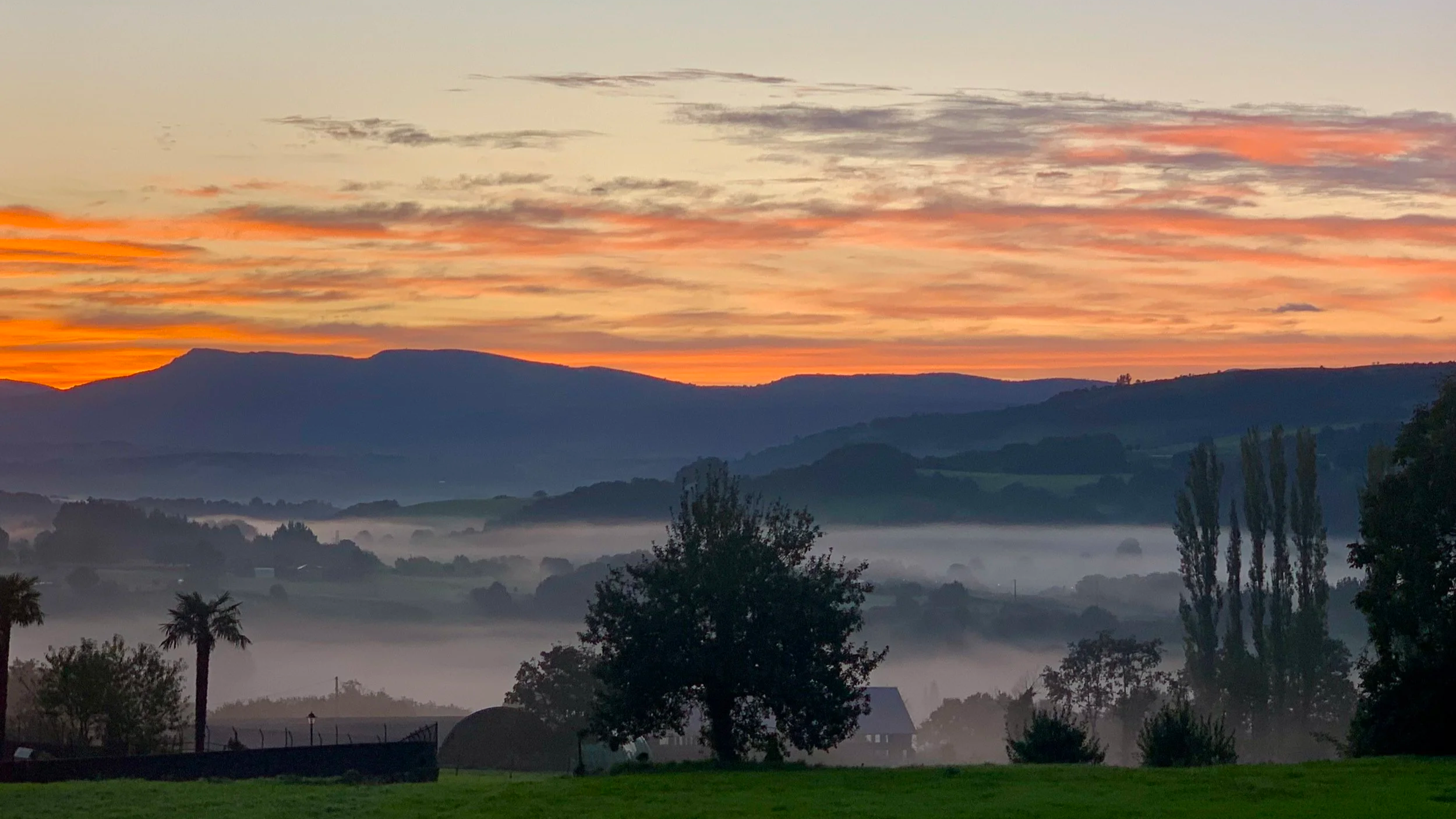
Sunrise on the way from Sarria to Santiago at 7 in the morning (October 14).
If you want quieter moments, they still exist. Start walking before 6/7 a.m., before the larger groups leave their albergues. Walk on weekdays instead of weekends, when day-trippers and local groups tend to join. Or consider walking outside peak season, in late autumn or winter, when the towns and the trail both feel calmer.
Who This Actually Works For
This stretch is not the wrong choice. It's the right choice for a specific kind of traveler, and there's nothing wrong with recognizing yourself in that description.
It works well for people with limited vacation time who still want a real physical and spiritual experience, not just a weekend trip. It works for families walking with children, since the terrain is manageable and support services like taxis, luggage transfer, and frequent cafés make the logistics much easier. It works for people who are curious about long-distance walking but aren't ready to commit weeks to it. And it works for people whose main goal is genuinely the Compostela itself, the cathedral, and the experience of arriving in Santiago. That is a valid goal on its own, not a lesser version of someone else's goal.
If You Want More Than the Certificate
If your schedule allows even a little flexibility, there are other one-week stretches that give you a different flavor of the Camino, quieter and, for some people, more reflective.
The first week out of Saint-Jean-Pied-de-Port takes you over the Pyrenees and into Roncesvalles and Pamplona. It's physically demanding early on, but the crowd here is smaller and more focused, since almost everyone starting this stretch is committing to walking much further.
A week through the Meseta, between Burgos and León, is flat, wide open, and mentally heavy in a good way. Fewer pilgrims choose this section, so you'll spend long hours with only the road and your own thoughts.
The days between O Cebreiro and Sarria are still part of Galicia, still green and rainy, but with far fewer people. O Cebreiro itself is a small mountain village with stone huts and one of the oldest churches on the entire Camino.
Another option is to split the Camino across several years. Walk one week this year, mark exactly where you stopped, and come back next year to continue from that same point. Do this three or four times, and you'll have walked the entire 800 km, just spread across your calendar instead of one continuous trip.
And if you do walk Sarria to Santiago and want one more quiet chapter afterward, consider continuing on to Fisterra and Muxía. It's a separate, shorter walk that starts in Santiago and ends at the Atlantic coast. After the crowds of the last 100 km, many pilgrims find this extension feels like the calm, personal ending they were originally looking for.
So, Is It Worth It?
Yes, if you walk in with the right expectations. Sarria to Santiago is busier, shorter, and more logistically simple than the rest of the Camino Francés. It is not the slow, remote walk you may have read about in other stories. But it still ends in the same place, in front of the same cathedral, with the Compostela in your hands to hang on your wall. For a lot of people, that is exactly what they came for.
If you're planning to start in Sarria, I'd love to know your reason. Tell me in the comments, or send me a message on Instagram or Facebook !
Buen Camino.