The Movies and Books That Changed the Camino
In 1972, only six people received the Compostela in Santiago. Six, for the entire year. In 2025, that number was 530,919. Government promotion and infrastructure investment explain part of that gap, but a surprising amount of it traces back to a handful of books and films that turned a nearly forgotten pilgrimage into something millions of people now put on their bucket list.
Before the Movies (1967 to 1989)
Before any of the pop culture moments that made the Camino famous, there was a priest named Don Elias Valina Sampedro, based in the small mountain village of O Cebreiro. In 1967, he wrote his doctoral thesis on the pilgrimage to Santiago, describing it as barely more than a distant memory. His 1971 book on the route did little to change that. The following year, 1972, only six pilgrims were officially recorded. So in 1973, he picked up a can of yellow paint and began marking the trail himself, creating the arrow system pilgrims still follow today. He died in 1989, years before the numbers he had hoped for finally arrived.

A mural honoring Don Elías Valiña, the priest from O Cebreiro who painted the first yellow arrows in 1973.
The Pilgrimage (1987)
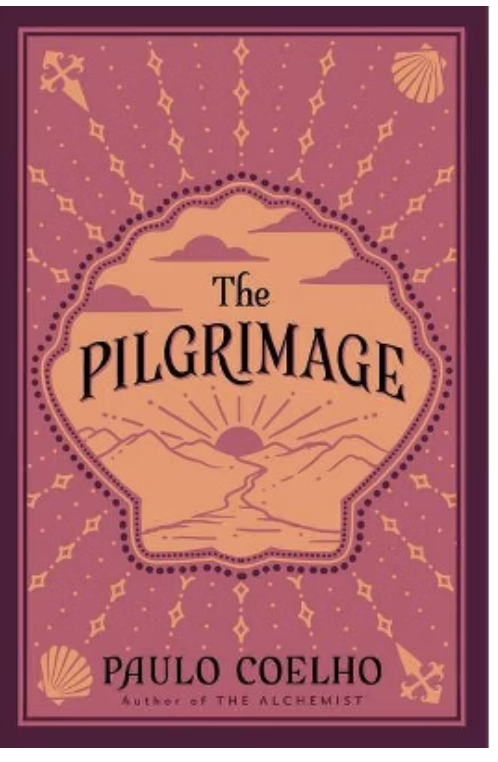
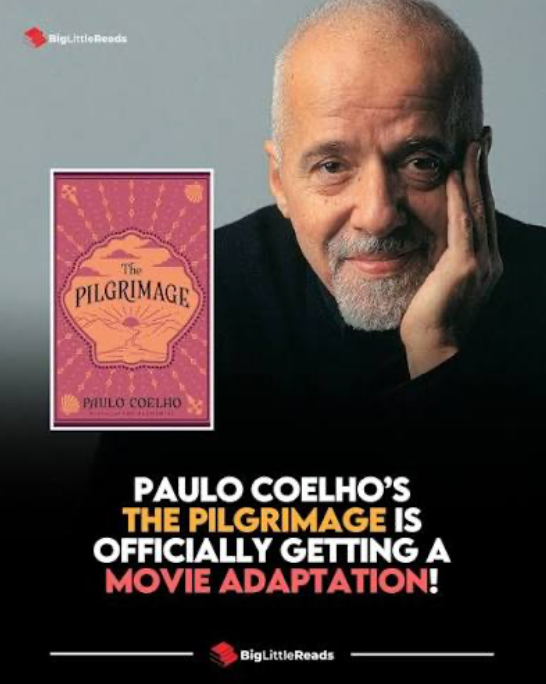
In 1986, a Brazilian writer named Paulo Coelho walked the Camino himself, and the following year published an account of that journey, originally titled O Diario de um Mago, later translated as The Pilgrimage. At the time, Coelho was not yet the household name he would become. That changed with his next book, The Alchemist, which turned him into one of the best selling authors in the world. Once that happened, readers went back to his earlier work, and The Pilgrimage found a much bigger audience than it had at launch. Its English translation was reissued in the United States in 2008 and has sold well over 250,000 copies there alone, introducing a huge international readership to the Camino for the first time.
A dramatic Netflix adaptation of Coelho's original novel is also in production, directed by Vicente Amorim, with Johnny Massaro playing Paulo and Rodrigo Santoro playing his spiritual guide, Petrus. It is currently filming across Spain and Brazil.
I’m Off Then (2009)
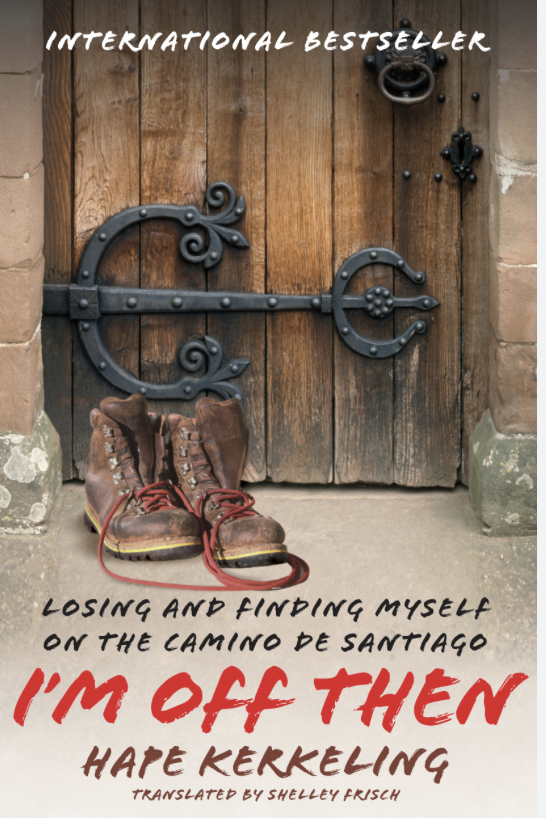
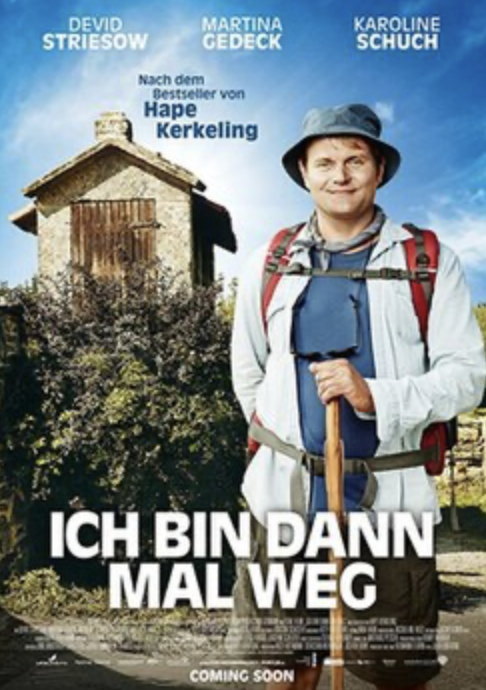
In 2009, German comedian Hape Kerkeling published Ich bin dann mal weg, or I'm Off Then, a personal, often funny account of his own struggles walking the Camino. The book became a massive bestseller in Germany and is widely credited with driving a sharp rise in German pilgrims specifically, a nationality that remains one of the most represented on the trail today, years after the book's release. It was later adapted into a film in 2015.
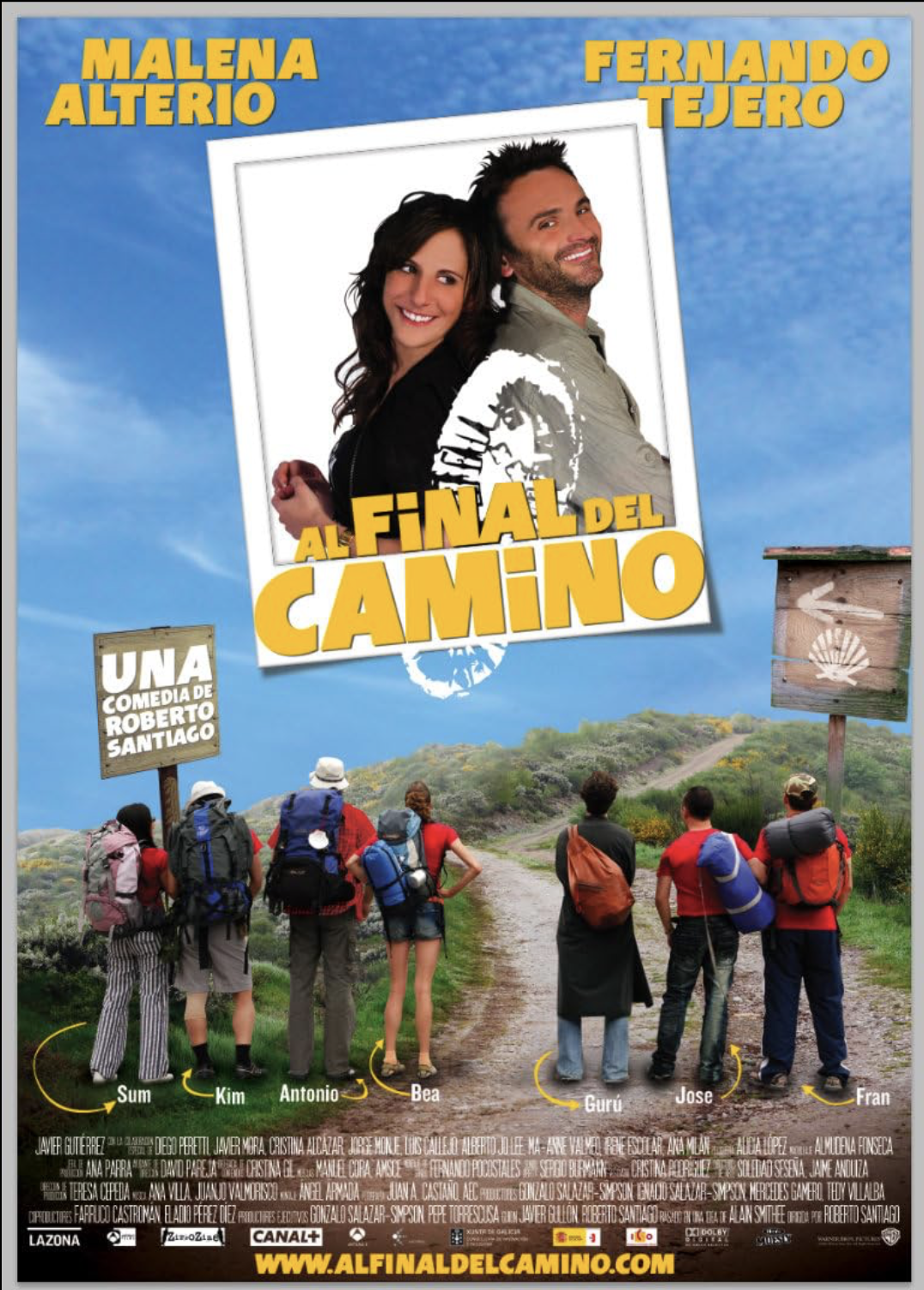
Road to Santiago (2009)
The same year, Spain got its own take on the Camino, this time as a romantic comedy. Al final del Camino, released in April 2009 and directed by Roberto Santiago, follows Nacho, a photographer, and Pilar, a journalist, who cannot stand each other but have to pretend to be a couple to write a story about Olmo, a guru who claims to fix relationship problems by walking pilgrims through the Camino.
Over six chaotic days across Galicia, the assignment turns into something closer to the real thing. It never reached the international audience of some of the films that followed, but in Spain it helped plant the Camino a little deeper into popular culture, a few years before the rest of the world caught on.
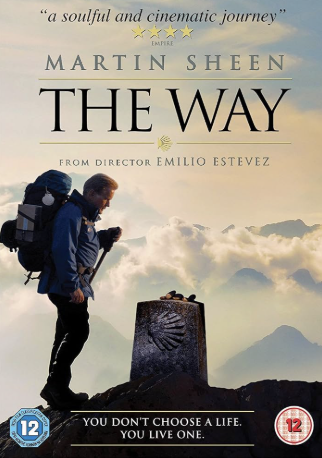
The Way (2011)
Then came The Way, directed by Emilio Estevez and starring his own father, Martin Sheen. Sheen plays Tom Avery, an American ophthalmologist who travels to France after learning his son died in a storm crossing the Pyrenees, in the first days of the Camino Francés. Rather than fly home with the body, Tom decides to walk the pilgrimage himself, carrying his son's ashes and scattering them along the way, joined gradually by a small group of fellow pilgrims he meets on the road.
The real father-son relationship behind the camera, Estevez directing his own father in a story about losing a son, gave the film an authenticity that resonated widely, and it is still frequently cited by English-speaking pilgrims, particularly Americans, as the reason they first heard of the Camino at all.
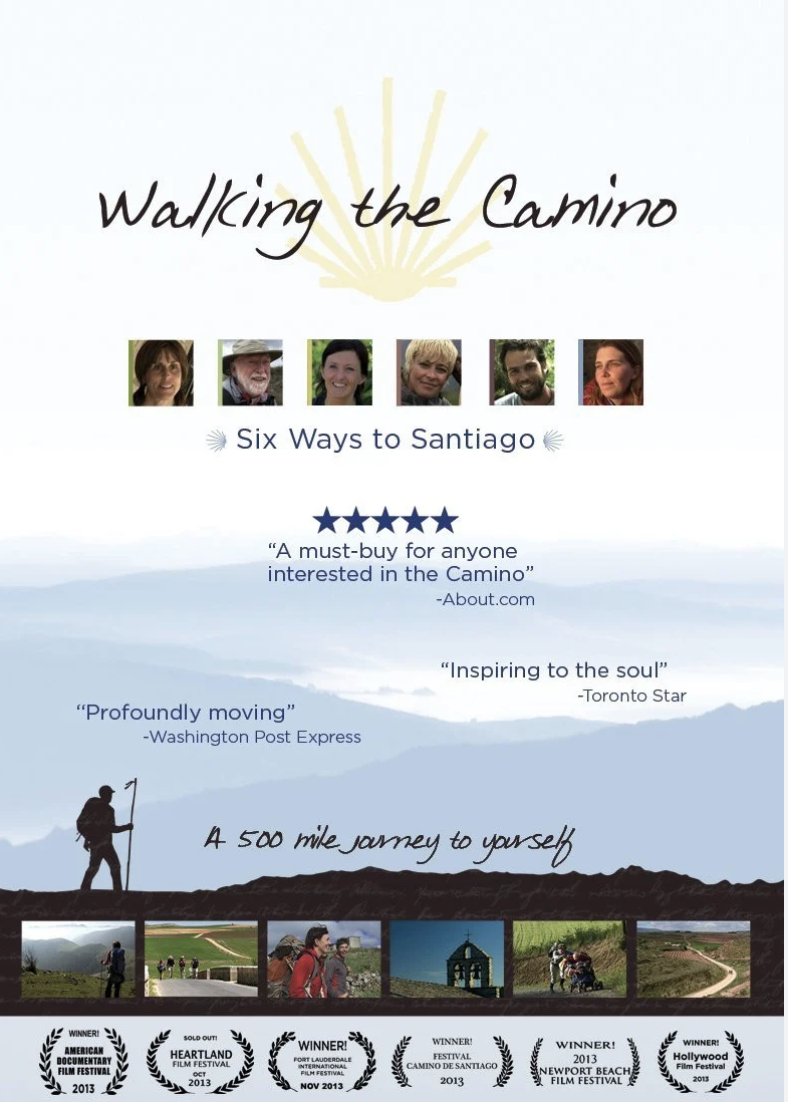
Walking the Camino: Six Ways to Santiago (2013)
Once The Way opened the door, documentaries followed. This one, directed by Lydia B. Smith, followed six pilgrims of different backgrounds and ages along the route, Annie, Tomas, Misa, Jack, Tatiana, and Sam, as they each face the Camino Francés in their own way, from Saint-Jean-Pied-de-Port all the way to Santiago.
Along the journey, the crew also spoke with more than fifteen other pilgrims and several Camino experts, filming much of it in a personal, diary-style format rather than a scripted narrative. Where The Way told one fictional story, this documentary offered something closer to a mosaic, a broader, less polished picture of who actually walks the Camino, and why their reasons rarely look the same from one pilgrim to the next.
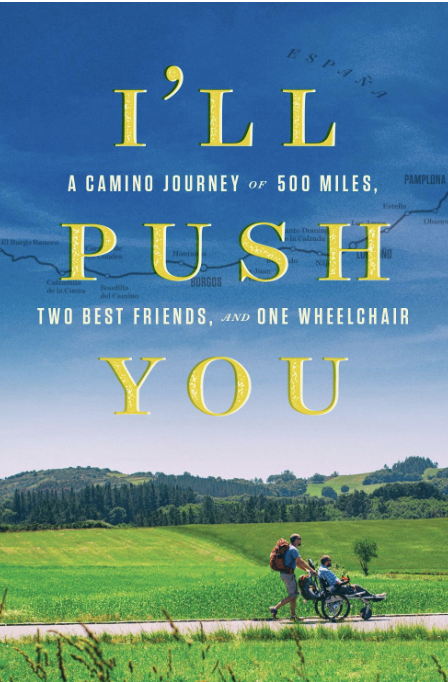
I'll Push You (2017)
This documentary tells the true story of Justin Skeesuck and Patrick Gray, lifelong friends since childhood. Justin lives with a rare neuromuscular disease that left him without the use of his arms or legs, confined to a wheelchair. Rather than let that stop him from walking the Camino, Patrick pushed him the entire way, across roughly 800 kilometers of the Camino Francés, over a 35-day journey in 2014.
The documentary follows the physical toll of that promise as much as the emotional one, two friends navigating hills, rain, and rough terrain that would be demanding even for someone walking unassisted. It became one of the most widely shared Camino films for its portrayal of friendship and sheer stubborn dedication, and helped introduce the pilgrimage to audiences who may never have considered it accessible at all. Smaller independent films and short documentaries have continued to appear nearly every year since.
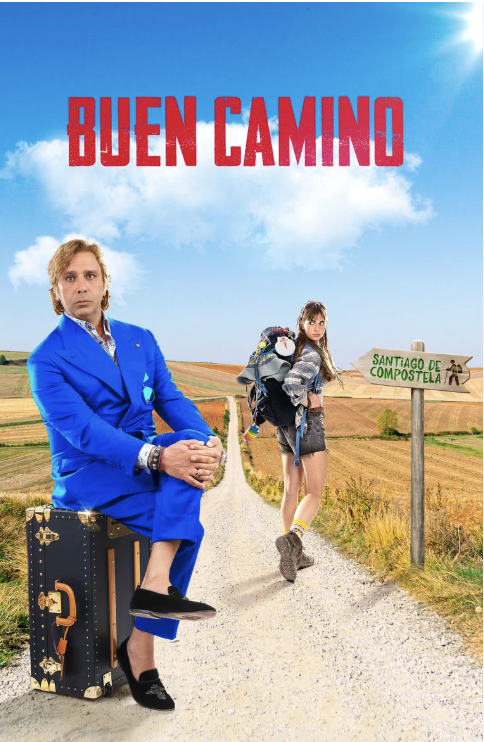
Buen Camino (2025)
The most recent, and in many ways the biggest, addition to this list came out of Italy. Buen Camino, released December 25, 2025, stars Checco Zalone, Italy's biggest comedy star, as a wealthy, vain man who discovers his teenage daughter has secretly gone to walk the Camino de Santiago. He tracks her down and ends up walking the route with her and a mysterious Spanish traveler, in a story that turns from comedy into something closer to a father-daughter reconciliation.
The film became a genuine phenomenon. It went on to become the highest grossing Italian film of all time, and picked up the audience award at the 2026 David di Donatello, Italy's equivalent of the Oscars. It became available on Netflix on April 29, 2026, putting the Camino in front of an enormous Italian, and now international, audience that had likely never considered walking it before.
None of this proves a direct, provable line from any single book or film straight to a spike in pilgrim numbers. Government promotion after the 1993 Holy Year, growing global interest in slow travel, and word of mouth between pilgrims all played their own part. But the timing is hard to ignore. A route that recorded six pilgrims in 1972 now records over half a million a year, and a surprising number of those pilgrims, when asked, point to a book they read or a film they watched as the moment the idea first took root.
Buen Camino.