Ultreia et Suseia: The Original Pilgrim's Greeting
Almost every pilgrim today knows to say Buen Camino when passing someone on the trail. Centuries ago, pilgrims said something else entirely. Ultreia et Suseia. It sounds strange the first time you hear it, and it carries far more history than the phrase that replaced it.
What the Words Mean
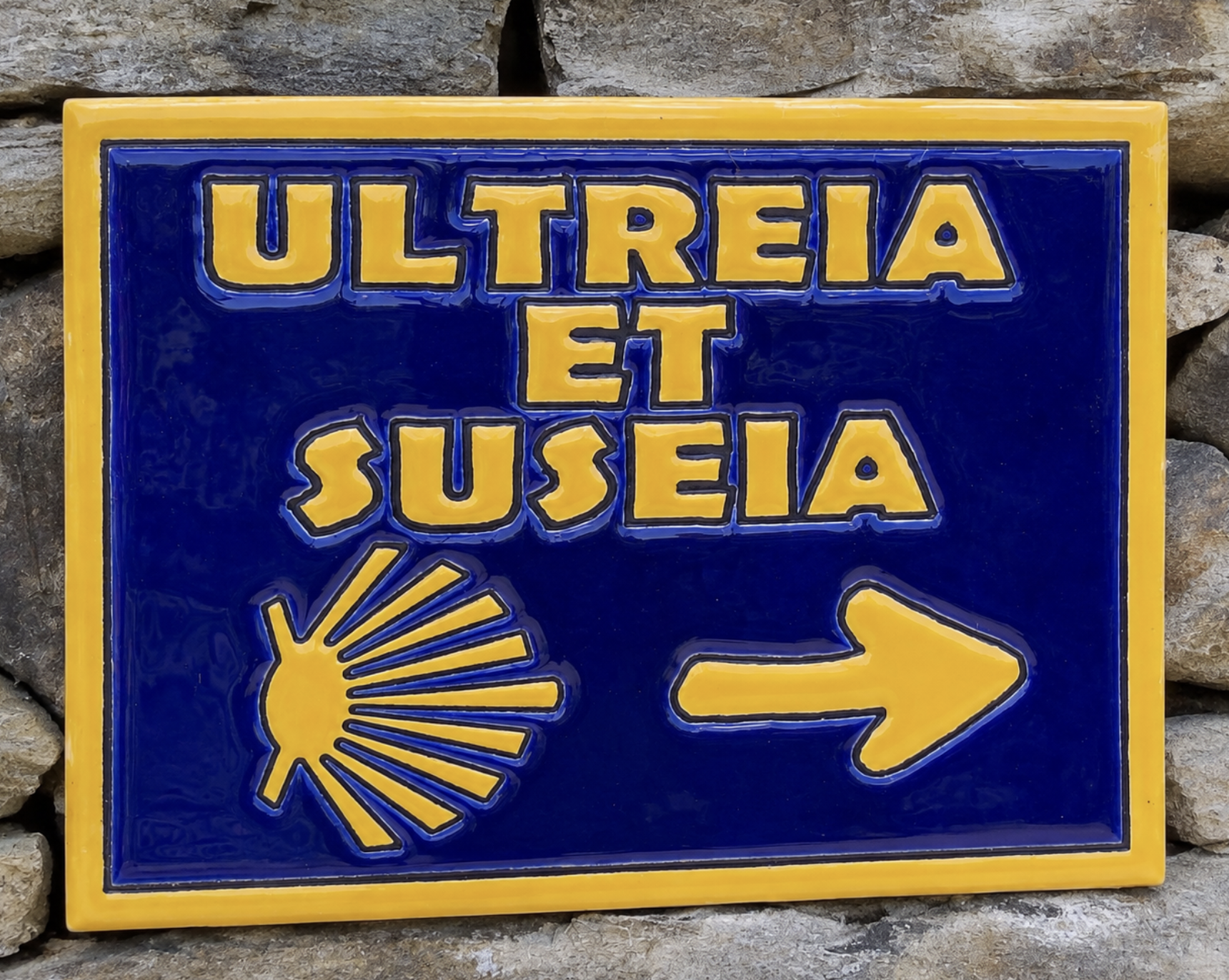
Ultreia comes from the Latin ultra, meaning beyond or farther. Suseia is generally translated as higher or upward. Together, Ultreia et Suseia roughly means onward and upward, a phrase of encouragement meant to push a tired pilgrim to keep moving.
It worked as a call and response. One pilgrim, passing another on the road, would call out Ultreia. The other would answer back, Et Suseia. A short, simple exchange between two strangers walking the same direction, centuries before Buen Camino became the standard greeting.
Where It Comes From
Like so much of what's known about the medieval Camino, this phrase traces back to the Codex Calixtinus, the 12th-century manuscript covered in an earlier post on this blog. It shows up in Book I, in a passage describing the celebration of Saint James's feast day, where the text describes people of every language and tribe arriving at his tomb, crying out the words together.
The phrase also appears in the Codex's musical appendix, inside a hymn called Dum Pater Familias, sometimes referred to as the Song of Ultreia or the Song of the Flemish Pilgrims. Historians consider it the oldest known pilgrim song connected to the Camino. Its refrain blends Latin with words that echo Old Germanic language, a small linguistic fingerprint of just how international the medieval pilgrimage already was, with walkers arriving from across Europe and singing the same lines in their own accents.
Not Quite One Fixed Translation
Translators don't fully agree on the exact shade of meaning behind Suseia. Most render it as higher or upward, tied to the idea of eventually reaching heaven, not just the cathedral in Santiago. A few sources connect it instead to an expression closer to hallelujah, a cry of joy rather than direction. Both readings share the same spirit: a phrase meant to lift a pilgrim's mood as much as their pace.
Why It Faded
Somewhere between the Middle Ages and today, Ultreia et Suseia mostly disappeared from daily use on the Camino. Buen Camino gradually took its place, shorter, easier to pronounce for pilgrims speaking dozens of different languages, and arguably shaped as much by modern tourism as by centuries of tradition. It isn't wrong or shallow. It's simply newer, and much less rooted in any specific text.
Still Alive, If You Look
The old phrase hasn't disappeared completely. It shows up today in the names of certain albergues and pilgrim associations, and among pilgrims who know its history, it still gets used from time to time, especially on quieter stretches of the trail or among people who've read the Codex Calixtinus themselves. Saying it to another pilgrim usually earns a surprised smile, followed by the correct response, if the other person happens to know it too.
There's something worth carrying in a phrase that's outlasted the empire that spoke its language, the manuscript that first wrote it down, and nearly a thousand years of pilgrims walking the same road. Onward and upward. It still works, whether or not the person next to you knows how to answer.
Buen Camino, or Ultreia!